
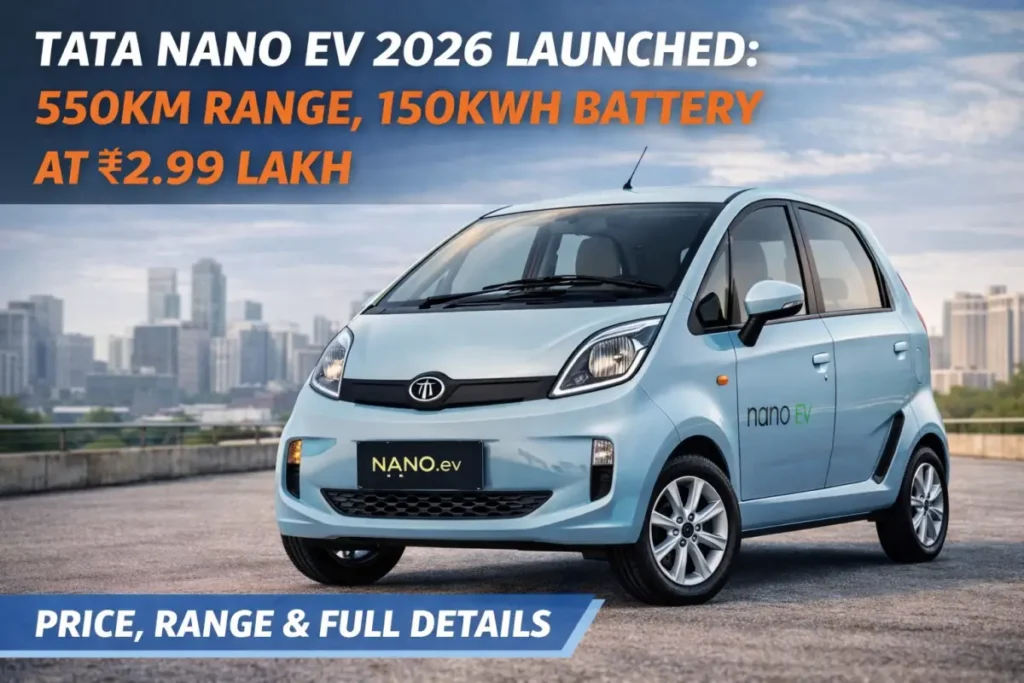
The Tata Nano is back in a new form. This time, it runs on electric power. The Tata Nano EV 2026 has created serious noise in the Indian auto space. The reason is simple. A claimed 550km range, a massive 150kWh battery, and a starting price of ₹2.99 lakh. That combination sounds almost unreal for an electric car.
People remember the Nano as a small city car made for daily needs. The electric version follows the same idea but adds modern tech and long range. This article explains what the Tata Nano EV 2026 offers, who it is for, and why so many buyers are searching for it.
Why Tata Revived the Nano as an EV
Tata Motors understands the Indian mass market better than most brands. Petrol prices keep rising. City traffic keeps getting worse. Buyers now want small, easy cars that cost less to run.
The original Nano was built for first-time buyers. The electric Nano aims at the same group. Students, small families, city workers, and budget-focused users fit the target. Electric power helps lower daily costs and reduces noise in crowded streets.
This revival is not about nostalgia. It is about need.
Launch Buzz and Market Reaction
The Tata Nano EV 2026 grabbed attention the moment its details surfaced. Social media, auto forums, and search trends spiked fast. Many people questioned the range and battery size. Others focused on the price.
In India, even basic electric cars cost much more. A sub-₹3 lakh EV with long range feels disruptive. Buyers want clarity. Is it real? Is it practical? Those questions drive traffic and discussion.
Claimed Range and Real Use Expectation
The headline number is 550km range. This figure likely comes under ideal test use. Such tests include low speed, light load, and full charge cycles. In daily city use, the real range may stay lower.
Still, even 300 to 350km in mixed driving would be strong. For city users, this means charging once or twice a week. That reduces stress and planning.
Range depends on speed, traffic, air use, and driving style. Tata may also use smart energy modes to help stretch the distance.
Battery Size and Charging Basics
A 150kWh battery sounds huge for a small car. If true, Tata may use a different battery setup or advanced cell packing. It may also include strong thermal control to manage heat.
Charging time will depend on the charger type. On a home socket, a full charge may take many hours. Fast charging support can reduce this time sharply. Tata may offer basic fast charge support to suit city needs.
Battery warranty will matter a lot. Buyers will look for long coverage to feel safe.
Design and Urban Focus
The Nano EV keeps a compact shape. That helps in tight streets and parking spots. The design looks cleaner and more modern than the old Nano. Expect smoother lines, better lighting, and improved build quality.
This car is not built to impress on highways. It is built to survive city life. Short turns, narrow lanes, and crowded areas suit its size.
Color options may stay simple. The focus remains on function over style.
Interior Layout and Space
Inside, the Nano EV focuses on basic comfort. Seating is upright. Controls are simple. Space feels enough for four adults on short trips. Boot space may stay limited, but usable for daily items.
A digital display may show speed, range, and battery status. Touchscreens may appear in higher trims. Physical buttons still matter for easy use.
Cabin noise should stay low due to the electric drive. That alone improves daily comfort.
Performance and Drive Feel
Performance stays tuned for city use. Instant electric torque helps during stop-start traffic. Pickup feels smooth, not aggressive. Speed limits will likely stay capped for safety.
Suspension setup focuses on comfort over sharp handling. Speed breakers and rough patches should feel manageable. Steering stays light for easy turns.
This car is not for fast driving. It is for calm, steady movement.
Smart Features You Can Expect
Smart features here mean useful ones. Expect basics that help daily use.
Possible features include remote lock, mobile charging port, and driving modes. App support may show battery status and location.
Advanced features may stay limited to control costs. That fits the Nano’s original idea.
Safety Features Overview
Safety matters even in small cars. Tata has improved safety across its lineup in recent years. The Nano EV should benefit from that approach.
Expected Safety Features Table
| Feature | Purpose |
| Dual Airbags | Front crash protection |
| ABS with EBD | Better brake control |
| Rear Parking Sensors | Easy city parking |
| Speed Alert | City speed awareness |
| Seatbelt Reminder | Passenger safety |
These features help meet basic safety needs without pushing cost too high.
Price Strategy and Variants
The most discussed part is price. ₹2.99 lakh places the Nano EV below most electric two-wheelers with advanced specs. Tata may offer multiple variants.
The base model may offer fewer features and a lower real-world range. Higher trims may add comfort and charging support.
Expected Price and Variant Table
| Variant | Claimed Range | Key Features | Expected Price |
| Base | 300–350km | Basic display, standard charging | ₹2.99 lakh |
| Mid | 400–450km | Touchscreen, better seats | ₹3.49 lakh |
| Top | Up to 550km | Fast charging, smart features | ₹3.99 lakh |
Prices may vary by state and incentives.
Running Cost and Daily Savings
Electric cars shine in running costs. Charging at home costs much less than petrol. Per-kilometre cost may stay under ₹1 in many areas.
Service needs are also lower. Fewer moving parts mean fewer repairs. Brake wear reduces due to regenerative braking.
For city users, monthly savings can be clear within a year.
How It Compares With Other Budget EVs
Most budget EVs in India cost above ₹6 lakh. They offer a decent range but a higher entry price. The Nano EV targets a gap no one else touches.
Two-wheelers still dominate this price range. A four-wheel EV at this cost feels attractive for families.
If Tata manages quality and service well, this car may change entry-level EV demand.
Who Should Buy the Tata Nano EV 2026
This car suits first-time buyers. It also fits city-only users who travel short distances daily. College students and small families may find it useful.
It may not suit highway users or long-distance travellers. Space and speed limits make it city-focused.
Buyers who want low-cost ownership will see value here.
Charging Network and Home Setup
Public charging still grows across India. Tata has invested in charging points through partnerships. Home charging remains the main method for Nano EV owners.
A standard wall charger may come with the car. Apartment users may need society support for setup.
Simple charging needs match the Nano EV lifestyle.
After-Sales Support and Trust
Tata’s service network is wide. That helps buyers feel confident. Parts access and trained staff matter a lot for EVs.
Battery service and software updates will shape long-term experience. Tata’s past EV models give some confidence here.
Support quality may decide success more than specs.
Concerns Buyers Should Keep in Mind
Some claims need real-world testing. Battery size and range numbers sound ambitious. Weight management also matters with large batteries.
Buyers should wait for road tests and official specs. Warranty details deserve close attention.
A low price should not mean poor safety or build quality.
Final Thoughts
The Tata Nano EV 2026 has the potential to change entry-level electric mobility in India. Long range, low price, and city focus form a rare mix. If Tata delivers close to what is claimed, this car could open EV access for millions.
It may not be perfect. It may not suit everyone. But it brings a bold idea back to life with electric power. For many city buyers, that alone makes it worth watching closely.