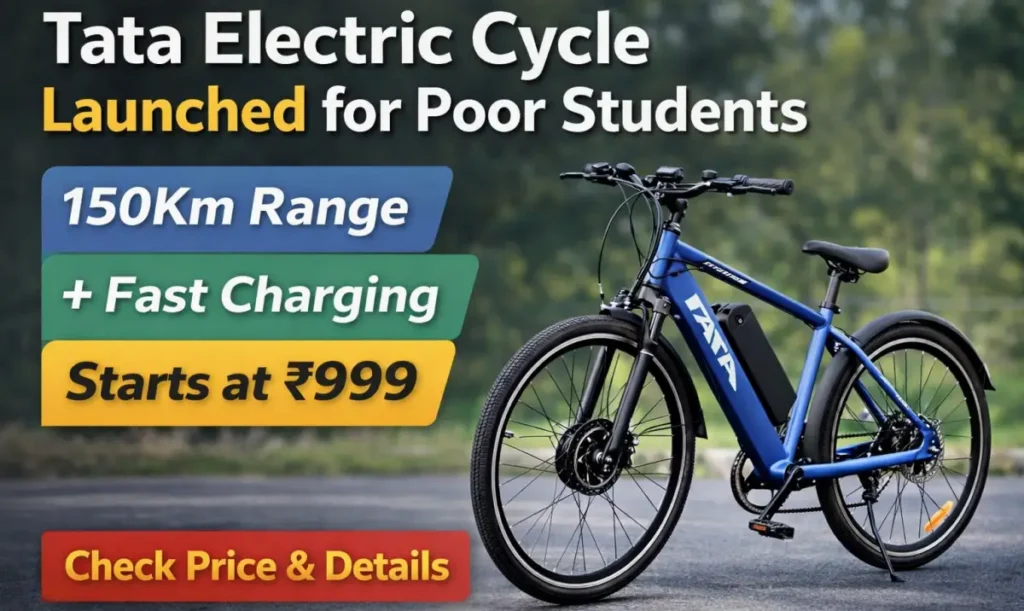
Tata has introduced an electric cycle aimed at students from low-income families. The goal is simple. Affordable travel for daily study, coaching, and part-time work. Rising fuel costs make even short trips hard for many students. A low-cost electric cycle can change that reality. This launch has drawn attention because of its claimed long range, short charging time, and very low entry price.
This article explains everything in clear terms. You will learn about the price, range, charging time, features, who should buy it, and what claims need careful reading. The language is simple and direct, so anyone can understand.
What Is the Tata Electric Cycle for Students
The Tata electric cycle is a pedal-assist electric bicycle. It works like a normal cycle but includes a motor and battery. Students can pedal normally or use electric power when tired. The cycle targets short city travel, such as school, college, tuition, or library visits.
The model is linked with Tata’s bicycle arm, often discussed under Tata Stryder electric cycle searches. It focuses on low running costs, easy use, and basic safety. The design is simple and not flashy. The focus stays on daily use, not style.
Read also: New Tata Electric Scooter Offers 250Km Range, 80Km/H Speed, Affordable ₹90,000 Price
Why Tata Focused on Poor Students
Many students travel five to fifteen kilometres every day. Bus passes cost money. Shared autos add daily expense. Fuel bikes are not an option for most students. Parents often struggle to manage travel costs along with fees.
An electric cycle solves this problem. Charging costs are very low. Maintenance is cheaper than motorbikes. No license or registration is needed in most states. This makes it suitable for students under eighteen as well.
Tata appears to be addressing this gap. The aim is not luxury. The aim is access.
Tata Electric Cycle Price for Students
Price is the main reason this cycle is trending. Many headlines mention a ₹999 figure. This number needs a clear explanation.
The ₹999 amount is not the full price. It is likely a booking or a monthly plan under select schemes. The actual price is higher but still lower than most electric cycles.
Here is a clear price table based on available details and common industry patterns.
| Variant | Battery Type | Claimed Range | Expected Price |
| Base Student Model | Lead Acid | Up to 80Km | ₹28,000 – ₹32,000 |
| Long Range Model | Lithium-ion | Up to 150Km | ₹38,000 – ₹45,000 |
| Subsidy or EMI Plan | Lithium-ion | Up to 150Km | ₹999 booking or monthly plan |
Prices may vary by state and scheme. Government support or school tie-ups can lower the upfront cost. Always check local offers before buying.
Tata Electric Cycle 150Km Range Claim Explained
The 150Km range figure has raised many questions. In real use, the range depends on many factors. Rider weight, road condition, speed, and pedal use all matter.
Under test conditions, with pedal assist and low speed, the lithium battery model may reach close to 150Km. In daily city use, expect lower numbers. A realistic range could be 90 to 110Km on mixed roads.
This range is still high for a student electric cycle. Most rivals offer 40 to 70Km per charge.
Read also: Tata Nano EV 2026 Launched With 550km Range, 150kWh Battery at ₹2.99 Lakh
Fast Charging Time Details
Charging time is listed as around three hours. This applies to the lithium-ion battery version. Fast charging helps students who use the cycle daily.
Charging can be done at home using a normal socket. No special setup is needed. Many students can charge it overnight or between classes.
Lead-acid versions take longer. Expect six to eight hours for a full charge. They also weigh more and offer less range.
Tata Electric Cycle Key Features
The features are basic but useful. Nothing feels extra or showy. The focus stays on daily comfort and safety.
| Feature | Details |
| Motor Power | 250W hub motor |
| Top Speed | Around 25 km/h |
| Brakes | Front and rear mechanical brakes |
| Frame | Steel frame for durability |
| Tyres | Thick city tyres |
| Display | Basic LED battery indicator |
| Pedal Assist | Multiple assist levels |
| Weight Capacity | Around 120Kg |
The speed stays within legal limits. This avoids license issues in most regions.
Tata Stryder Electric Cycle Connection
Many searches mention the Tata Stryder electric cycle. Stryder is Tata’s known bicycle brand. This electric cycle appears to come under the same umbrella.
Stryder cycles are already common in India. This helps with service reach and spare parts. Students in small towns may find service easier than with new startups.
Tata Cycle Electric Running Cost
Running cost is where electric cycles shine. Charging a full battery costs less than ten rupees in most areas. Even with daily use, the monthly cost stays very low.
There is no petrol. No engine oil. Fewer moving parts reduce repair needs. Brake pads and tyres are the main wear items.
This makes the Tata electric cycle suitable for families with tight budgets.
Safety and Build Quality
Safety matters for young riders. The frame uses steel, not light alloy. This adds strength but also weight. For city use, this trade-off makes sense.
Brakes are basic but reliable. Riders should still use helmets. Reflectors and lights help during early morning or evening rides.
Suspension is limited. This cycle suits paved roads better than rough village tracks.
Who Should Buy This Electric Cycle
This cycle suits specific users very well.
Students who travel daily short distances will benefit the most. Coaching students and college commuters fit the profile. Part-time workers can also use it.
It may not suit riders seeking speed or sporty looks. It is not made for hills without pedalling. Heavy riders should check weight limits before buying.
Tata Electricity Cycle Number and Support
Many users search for the Tata electricity cycle number for support or booking. Official contact details vary by region. Tata Stryder dealers usually handle queries.
Before paying any booking amount, confirm the dealer’s authenticity. Avoid third-party sites asking for full payment upfront. Use official Tata or dealer channels only.
EMI, Subsidy, and ₹999 Claim Reality
The ₹999 figure often confuses. It may relate to an EMI start plan, a booking fee, or a pilot program. Full ownership still needs total payment over time.
Some states offer electric vehicle support. School or NGO programs may also help students get cycles at a lower cost.
Always read the plan terms. Ask for written details. Do not rely only on headlines.
Comparison With Other Electric Cycles
Compared to other electric cycles, Tata’s offering focuses on trust and service. Many new brands offer similar features but lack long-term support.
Price stays competitive. Range claims are higher than average. Brand backing adds confidence for parents.
Real-World Use Expectations
In daily use, students should expect smooth rides on city roads. Pedal assist reduces effort. Battery life depends on care and charging habits.
Avoid deep discharge often. Keep tyres inflated. These habits extend battery life.
Common Questions Students Ask
Is a license needed?
No license is needed if the speed stays under legal limits.
Can it run without pedalling?
Yes, but the range drops faster.
Is the battery removable?
Some versions offer removable batteries.
Is service available in small towns?
Availability depends on Stryder dealer presence.
Final Thoughts for Students and Parents
The Tata electric cycle for poor students is a practical idea. It addresses a real problem. Travel cost blocks education for many families. A low-cost electric cycle reduces that burden.
Still, buyers should stay careful. Verify price claims. Understand range limits. Choose a lithium battery if the budget allows.
Used wisely, this cycle can support education and daily mobility. It is not a miracle product. It is a simple tool for daily life.
If Tata keeps pricing honestly and service wide, this electric cycle can help many students move forward without adding stress to family budgets.