The idea of a Patanjali electric cycle has grabbed attention across India. People expect a simple, low-cost ride with long range and daily use in mind. With fuel prices high and cities crowded, many riders want a clean option that does not feel complex or costly.
That is where the Patanjali Electric Cycle 2026 fits into the discussion. This article explains what is known so far, what buyers can expect, and why this e-cycle is getting so much talk.
Why Patanjali Entered the Electric Cycle Space
Patanjali has built a name by selling products that focus on low prices and local needs. From food to health items, the brand often targets mass users.
An electric cycle matches that approach. It promises low running costs, easy use, and less load on the pocket. For short city trips, a cycle with motor support feels more practical than a scooter for many people.
Electric cycles also suit students, office workers, and older riders. They do not need a license or registration in many regions. Charging is simple, and repair is lighter than that of motor vehicles. This makes the segment ready for a large Indian brand.
Read also: Yamaha Rajdoot 350 2026 Bike: Old-School Design Meets Modern Features
Launch Timeline and Market Buzz
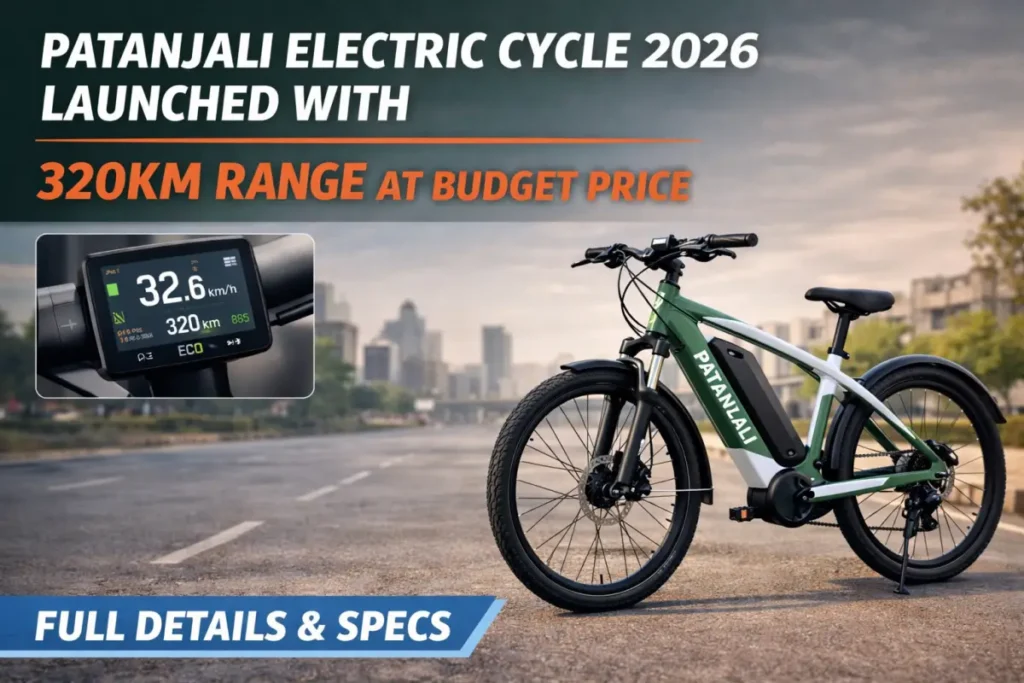
Reports suggest the Patanjali Electric Cycle 2026 is planned for late 2026. The company has not shared full details yet. Still, early leaks and market talk hint at a long-range figure that sounds bold. A claimed 320KM range has sparked debate. If this number holds in mixed riding, it would stand out in the budget class.
Such talk alone brings traffic. People search for range, price, and launch date. That is why clarity matters. Most electric cycles today offer 40 to 80KM per charge. A higher figure may depend on pedal assist use, speed limits, and rider weight.
Claimed Range and What It May Mean
The headline claim is a 320KM range. This likely comes under ideal test use. Real use may vary. Many brands count range with full pedal support and low speed. In daily city rides, users should expect less. Even then, a range above 100KM would feel strong for this price band.
Long range reduces charging stress. Riders can use the cycle for days before plugging in. This suits small towns and rural edges where charging points are few.
Battery and Charging Basics
Battery details are still under wraps. Based on the range claim, the cycle may use a high-capacity lithium pack. It may also support pedal assist levels to save power. Charging time is expected between 4 and 6 hours on a home socket.
A removable battery would help many users. It allows indoor charging and easy replacement later. Safety also matters. Heat control and basic protection features should be present for Indian weather.
Motor and Ride Feel
The motor is expected to stay within legal power limits. Most electric cycles use 250W motors. This keeps them legal without registration. Speed may be capped at around 25 kmph.
The ride’s focus seems to be comfort, not speed. Smooth pickup, light noise, and steady support matter more here. For city roads and short slopes, such a motor is enough.
Design and Build Expectations
Patanjali often keeps design simple. The electric cycle may follow a clean, daily-use frame. Expect a step-through or standard diamond frame. Alloy wheels and front suspension may be offered in higher trims.
Weight control is key. A heavy cycle feels hard once the battery drains. The brand will likely aim for a balanced build that suits all age groups.
Read also: Honda Shine 125 Bike Review: Killer Design, 90 KMPL Mileage & Smart Features
Smart Features You May See
The word smart here does not mean complex screens. It likely means useful basics. A digital speed display, battery level indicator, and assist mode switch are common now. Some models may add USB charging for phones.
Security features may include a motor lock or key-based power start. App support is less likely in a budget model, but not impossible.
Expected Price and Variants
Price is where Patanjali can make the biggest impact. Market talk points to a range between ₹35,000 and ₹55,000. This would place it among the most affordable long-range e-cycles.
There may be two or three variants. Lower trims may offer less range and fewer extras. Higher trims may include better battery and suspension.
Expected Features and Price Table
| Variant | Claimed Range | Battery Type | Key Features | Expected Price |
| Base Model | 120–150 KM | Lithium-ion | Pedal assist, basic display | ₹35,000 |
| Mid Model | 200–220 KM | Lithium-ion | Front suspension, USB port | ₹45,000 |
| Top Model | Up to 320 KM | High-capacity lithium | Digital console, better brakes | ₹55,000 |
Prices may change at launch. These figures reflect market expectations, not final numbers.
Daily Use and Running Cost
Electric cycles shine in daily use. Charging cost stays very low. A full charge may cost less than ₹10 at home rates. Service needs are simple. Brake pads, chain, and tires form the main upkeep.
This makes the cycle ideal for short work commutes. Students and delivery riders may also see value here.
How It Compares With Other Electric Cycles
Most budget electric cycles in India offer under 100KM range. Brands like Hero Lectro and EMotorad focus on urban users. Patanjali may aim wider. If the long range holds, it sets a new bar in this price range.
Still, after-sales support matters. Service reach and spare supply will decide long-term success.
Safety and Legal Points
Electric cycles under set power and speed limits do not need a license. This makes entry easy. Riders should still use helmets and follow traffic rules. Lights, reflectors, and a horn should come fitted.
Battery safety is another point. Proper casing and heat control are important in summer.
Who Should Consider This Cycle
This cycle suits riders who want low-cost travel. Office goers with short routes fit well. Older users who want light pedal support may like it. Rural users can benefit from long range and low fuel spend.
It may not suit those who want speed or sporty rides. This is a utility cycle first.
Booking and Availability
Booking details are not public yet. Patanjali may sell through its own stores and online site. Partner dealers may also help with reach. Launch events may begin in major cities before a wider rollout.
Things to Watch Before Buying
Wait for real road tests. Check the true range under daily use. Look at the warranty terms on the battery and motor. Confirm service support near your area. These points matter more than headline numbers.
Final Take
The Patanjali Electric Cycle 2026 aims to bring electric riding to the masses. A bold range claim and low price create strong interest. If the brand delivers even part of what is promised, it can shift this segment.
For buyers, the key is patience. Watch official details, compare options, and choose based on real needs. Electric cycles are about ease and savings, not hype. If Patanjali keeps its focus there, this launch could matter.